
Knee and hip replacement surgery has helped a lot of people in Kamloops get their lives back. Most people who have a total knee or hip replacement see real improvements in pain and how well they can move.
But surgery is the start of recovery, not the end. What you do in the weeks and months after — how well you rehab, how often you move, and how you handle the hard days — has a big effect on where you end up.
This post covers what recovery from knee and hip replacement actually looks like, what common challenges people run into, and where massage therapy fits in alongside physio and your surgical team.
What Recovery Actually Looks Like
Recovery looks different for everyone. But there are common patterns worth knowing before surgery.
After total knee replacement:
Most people are putting weight on the leg with support within the first day or two
Swelling, stiffness, and pain in the first two to six weeks are normal
Range of motion work starts early because scar tissue forms fast around the new joint
Full recovery to comfortable daily activity usually takes three to six months, with some improvement continuing for up to a year
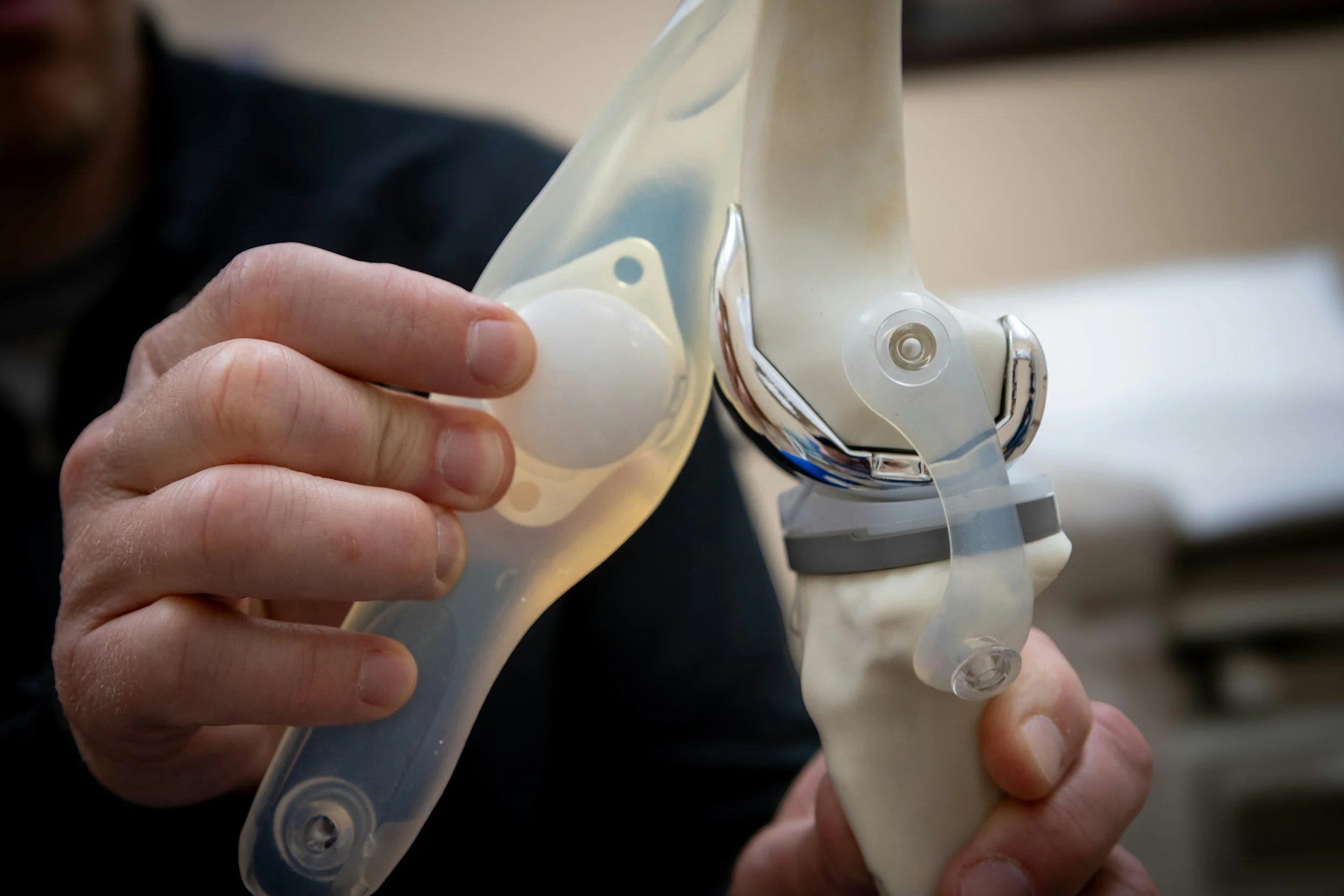
After total hip replacement:
Most people are walking with help within a day or two of surgery
Movement limits to protect the new hip are common for the first six to twelve weeks, depending on the surgical approach
Most daily activities return within six to twelve weeks, with strength and function continuing to improve over the following months
In both cases, physio is the main support for recovery. Massage therapy works best as a complement to that, not a replacement.
Common Challenges in Recovery
Even when surgery goes well, recovery has some predictable difficulties. Knowing what to expect makes them easier to handle.
Swelling is one of the most common issues after knee replacement. The knee has a lot of surrounding soft tissue, and swelling can limit range of motion and make early rehab harder. It can last for weeks to months.
Soft tissue tightness and guarding are also common. The muscles around the replaced joint have often been in protective patterns for months or years before surgery. They do not automatically reset after the operation. That tightness can limit how freely the new joint moves.
Fear of movement is another barrier. Pain after surgery is real, and being careful makes sense. But as with OA before surgery, avoiding movement out of fear tends to slow recovery rather than protect it. The discomfort of early post-surgical rehab is generally a necessary part of the process.
Pain variability is normal too. Some days feel like good progress. Others feel like a step back. This is expected and does not usually mean something is wrong. We cover pain variability in more depth in the final post in this series.
What the Evidence Shows for Massage After Knee Replacement
The strongest evidence for hands-on care after joint replacement focuses on knee replacement specifically.
A 2024 review published in the Journal of Orthopaedic Surgery and Research looked at eleven randomized controlled trials with 940 people who received massage as part of their post-knee replacement rehab. The review found that the massage group had more significant pain relief at seven, fourteen, and twenty-one days after surgery. Improvements in knee range of motion were also more pronounced at days seven and fourteen.
These are early recovery outcomes — the window when pain and stiffness are highest and getting range of motion back matters most. That is also the window where soft tissue work alongside physio is most likely to be useful.
It is worth being honest about the limits of this evidence. The studies varied in technique, how many sessions were used, and what counted as the comparison. These are real limitations. The findings are encouraging and make clinical sense, but they are not strong enough to predict exactly what benefit any one person will see.
For hip replacement specifically, the direct evidence base for massage is thinner. What exists suggests soft tissue work around the hip, thigh, and lower back can support function and comfort during recovery. We use the same assessment-led approach and adjust based on where you are in recovery and what your surgeon has said.
Timing and Precautions
Post-surgical massage requires care around timing and approach.
In the first two weeks after surgery, the focus is on wound healing and early movement under your surgeon’s and physiotherapist’s guidance. Any soft tissue work during this phase would stay well away from the surgical site.
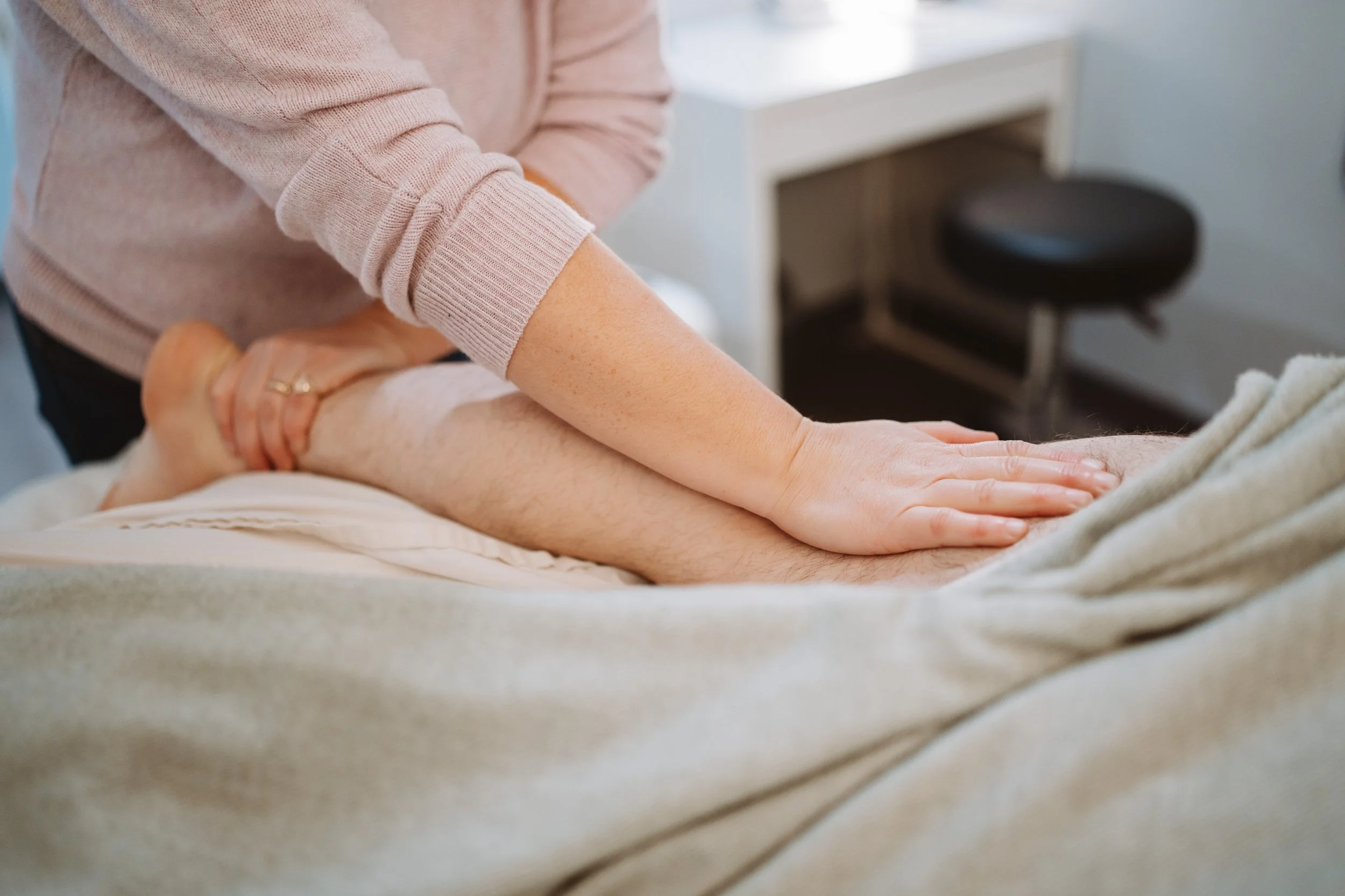
From about two to six weeks onward — with clearance from your surgical team — massage to the surrounding soft tissue becomes more appropriate. This might include the muscles of the thigh, hip, calf, and lower back that are under extra load in early recovery.
Direct work near the surgical site or scar tissue is typically appropriate later in recovery, once healing is well established and with the right technique.
At Well+Able, we always ask about your surgical timeline, your surgeon’s instructions, and where you are in your physio before planning a post-surgical session. We work within your surgical precautions, not around them.
How RMT Fits Alongside Physiotherapy
Physio is the foundation of recovery after joint replacement and should stay that way. Massage therapy works best alongside it — supporting the soft tissue side while physio focuses on strength, function, and movement retraining.
In practical terms, that might mean:
Reducing tension in the quads, hamstrings, and hip flexors that are limiting your rehab exercises
Working on calf and lower leg tightness that builds up from changes in how you walk early in recovery
Supporting hip mobility in hip replacement recovery within your surgeon’s movement restrictions
Providing a calm, lower-demand session on a harder week when pain or fatigue has been higher
We communicate with other providers when it is relevant and when you have given us permission. The goal is a coordinated approach, not a competing one.
Aquatic Exercise in Recovery
Once your wound has healed and your surgeon has cleared you for water, aquatic exercise is a well-supported option in the later stages of recovery.
Water reduces the load on your joint while still letting you build strength and improve range of motion. For people who find land-based rehab exercises uncomfortable in the early months, pool exercise can be a useful bridge.
In Kamloops, the Tournament Capital Centre is a practical local option. Check with your surgeon or physio on timing before getting into a pool.
Related reading: Preparing for a Knee or Hip Replacement — How Massage Therapy Can Support You With OA — Why OA Pain Varies Day to Day
Book today
If you are recovering from a knee or hip replacement and want to talk through whether massage therapy is a good fit, we are taking new patients. Book online or give us a call.