
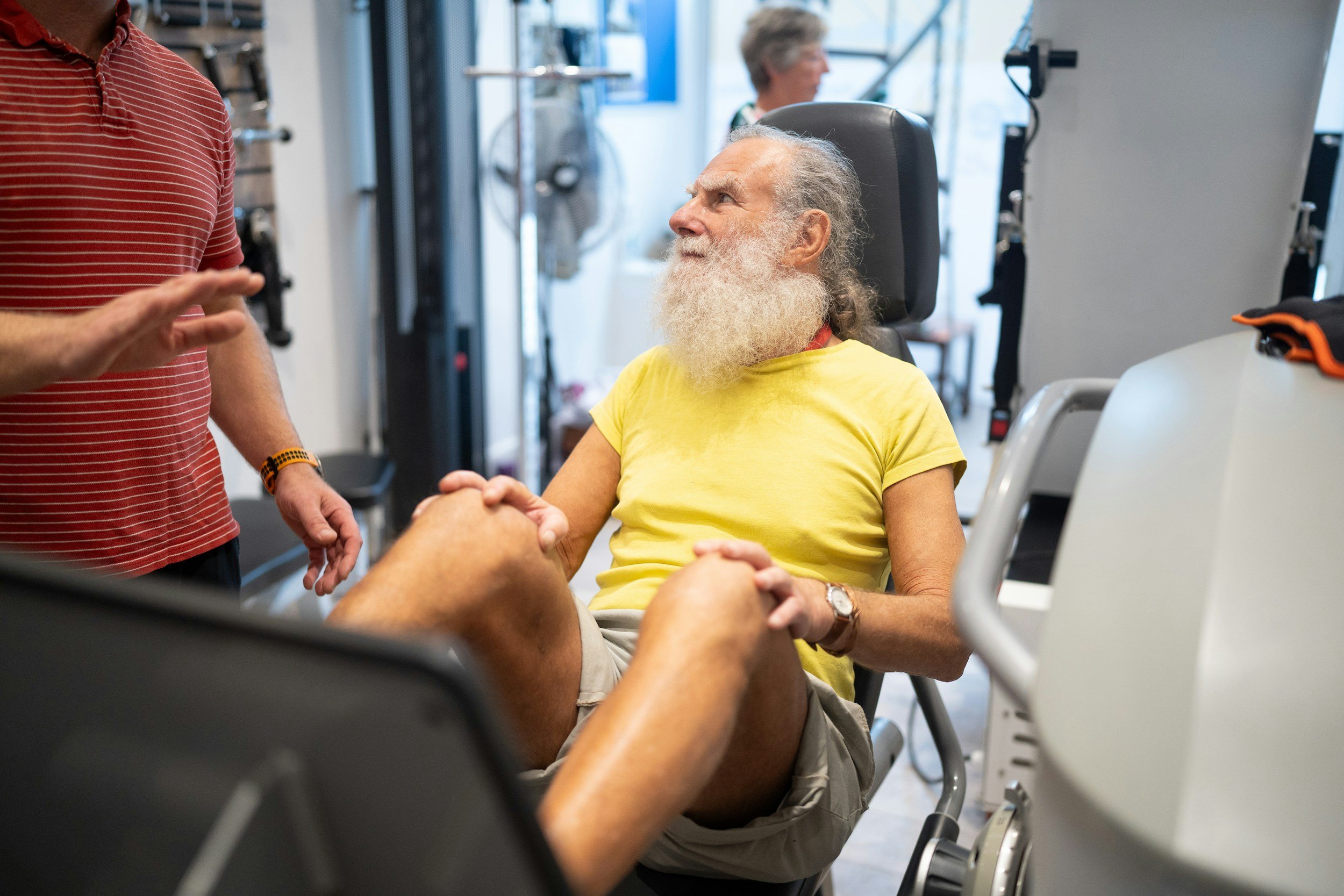
If you have osteoarthritis, there is a good chance someone has told you to rest more, avoid certain moves, or take it easy when things flare up.
That advice feels right. But for most people with OA, it is the opposite of what the research recommends.
This post covers what the evidence says about movement and OA. It looks at why fear of activity is so common, why it tends to make things worse, and what kinds of exercise actually help.
The Activity Gap in OA
Despite strong evidence that exercise helps with OA, most people with the condition are not doing enough of it.
Research behind the EPIPHA-KNEE trial — led by Associate Professor Tasha Stanton at the University of South Australia — found that nine out of ten people with knee OA are not active enough. The main reason was not that they could not move. It was fear. Specifically, the belief that being active would damage the joint further.
That belief makes sense given the language around OA. Words like “wear and tear,” “bone on bone,” and “degenerative” make the joint sound too damaged to handle activity. But the evidence points a different way.
Fear of Movement Makes Symptoms Worse
Stanton’s research has shown that people with knee OA who fear movement tend to be less active. And being less active tends to make symptoms worse over time, not better.
Her work also found something interesting about how people with painful knee OA see the world around them. They tend to see their environment as more threatening than it actually is. Hills look steeper. Distances feel longer. The higher the fear and pain, the stronger this effect.
The body is trying to protect itself. That makes sense. But when it leads to months or years of less activity, it adds to the problem. Muscles weaken, joints get less support, and pain sensitivity increases. It becomes a cycle that is hard to break without some help.
What the Evidence Supports
Multiple reviews and guidelines point to exercise as a core treatment for OA. Not a bonus — a primary recommendation.
A 2024 review published in Cureus looked at 12 studies with nearly 5,000 people. It found that exercise led to real improvements in pain, physical function, and quality of life for people with knee and hip OA.
The OARSI guidelines — an international standard for OA care — list exercise as a core recommendation for everyone with OA, regardless of how severe it is. Both land-based and water-based exercise are included. The guidelines also note that combining exercise with education works better than exercise alone.
That matters. Learning about pain — what it means, why it changes, what drives it — alongside moving more is more effective than just moving more on its own. Addressing the fear is part of the treatment.
What About Aquatic Exercise?
For people who find regular exercise too uncomfortable to start, water-based exercise is a well-supported option.
A Cochrane review on water exercise for knee and hip OA found moderate evidence that it reduces pain and disability and improves quality of life compared to no exercise. A separate systematic review found that pain went down significantly in people with hip and knee OA who did aquatic exercise programs.
Water holds up your body weight. That takes load off the joints while still letting you build strength and keep moving. It is not a permanent replacement for land-based activity, but it is a solid and well-researched starting point.
In Kamloops, the Tournament Capital Centre has pool access that several of our patients use regularly. For people managing OA, it is a practical local option worth knowing about.
What Type of Exercise Is Best?
The honest answer: the kind you will do regularly.
That said, the evidence supports a few broad categories:
Aerobic exercise such as walking, cycling, or swimming — supported for pain and function
Strength training — builds the muscle support around affected joints
Aquatic exercise — useful starting point, especially when pain is higher or fitness is lower
Tai Chi — growing evidence for older adults with OA, especially for balance and pain
The 2024 review also noted that exercise works better when it is matched to the individual. Age, fitness, and other health conditions all matter. One approach does not fit everyone.
How Massage Therapy Fits In
Hands-on care is not a substitute for exercise in OA. The evidence is clear on that. But it can play a useful supporting role.
For some people, muscle tension or discomfort in the tissue around the joint makes starting or keeping up with activity harder. Massage therapy can help with that. It works on the soft tissue around the joint, reduces tension that limits movement, and can help people feel more ready to move.
At Well+Able, our RMTs work alongside your exercise routine, not instead of it. Sessions are assessment-led, and we talk about what you are working toward — whether that is walking the Rivers Trail, getting back in the pool, or just moving more comfortably through your day.
A Note on Starting Slowly
If you have been inactive for a while, starting exercise with OA can feel daunting. Some discomfort during and after new activity is normal as the body adjusts.
A general guide: if pain during activity is manageable and settles back to your usual level within a few hours, the activity is likely appropriate. If pain is much higher the next day, the amount or intensity may need to come down.
This is worth discussing with whoever supports your care — your GP, a physiotherapist, or your RMT.
Related reading: What Is Osteoarthritis, Really? — How Massage Therapy Can Support You With OA
Book today
If you would like support managing OA alongside your exercise routine, we are taking new patients. Book online or give us a call.